



A bearing that has worn in or rusted in place rarely comes off with a puller alone. Heat the inner ring briefly and powerfully, and the puller then does the job without damaging the shaft.
Bearings and bushings
Induction bearing heater for removing bearings and bushings
Heat a seized bearing, bushing or hub precisely and without an open flame. The heat goes where you want it, not into the seals, wiring or paint around it.
Why heat matters in bearing work
A few hundredths of clearance make the difference
Bearings, bushings and gears are held in place by an interference fit. The difference between stuck and free is often no more than a few hundredths of a millimetre. Steel expands when heated, and it is exactly that small expansion that gives you the clearance you need. Heating a bearing is therefore often the only way to remove it without damage.
An induction heater generates that heat directly in the metal. There is no flame, heating stops the moment you release the trigger, and you decide which part gets hot.
- Targeted heating of the housing, inner ring or hub during disassembly
- No open flame near seals, grease and plastics
- Interchangeable coils for varied shapes and confined working spaces
- Works on ferromagnetic steel, even when the part is still installed
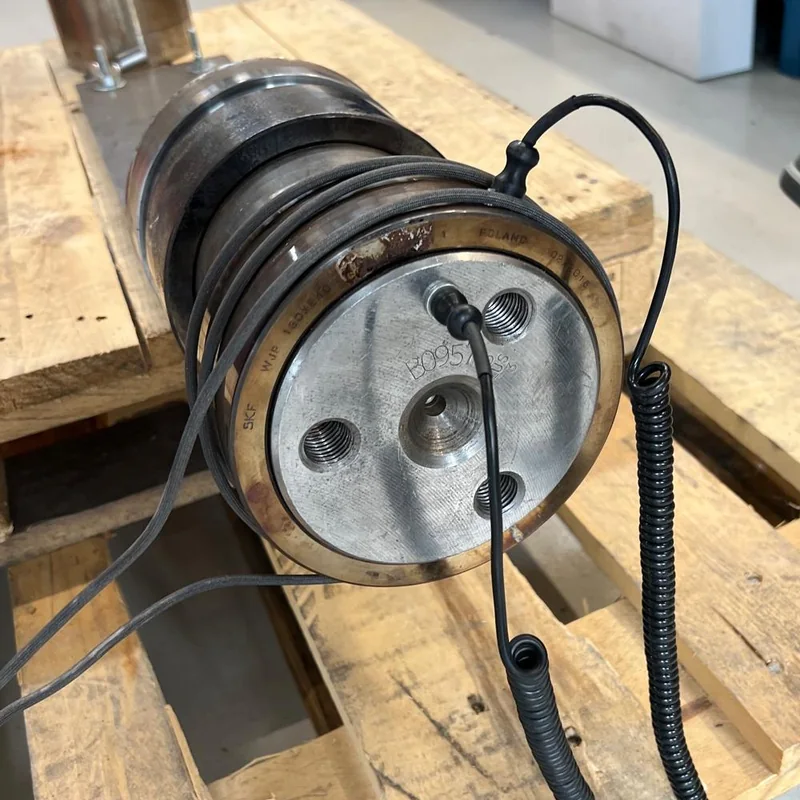
How it works
Heating a bearing: which part, and when
If the bearing is stuck in a housing, heat only the housing. The bore expands, the bearing comes free and the shaft stays untouched. Do not heat the outer ring itself: it would only expand inside a cold bore and seize even tighter.
If the bearing is stuck on a shaft, it works the other way round: heat the inner ring briefly and powerfully so that it expands before the heat reaches the shaft. In that short moment you pull it off.
In both cases work in short intervals, spread the heat around the part and check beforehand which seals and lines are nearby.
Three situations you meet in the workshop
The bushings in spring eyes and control arms are pressed into a steel eye. Heat that eye precisely and the bushing comes free without dismantling the surrounding suspension. The coil goes around the eye, the heat stays in the steel and the bushing presses out in one go.
Gears, pulleys and coupling hubs on a shaft: heat the hub and pull it off while the shaft is still cold. That saves hammering and prevents damage to the shaft.
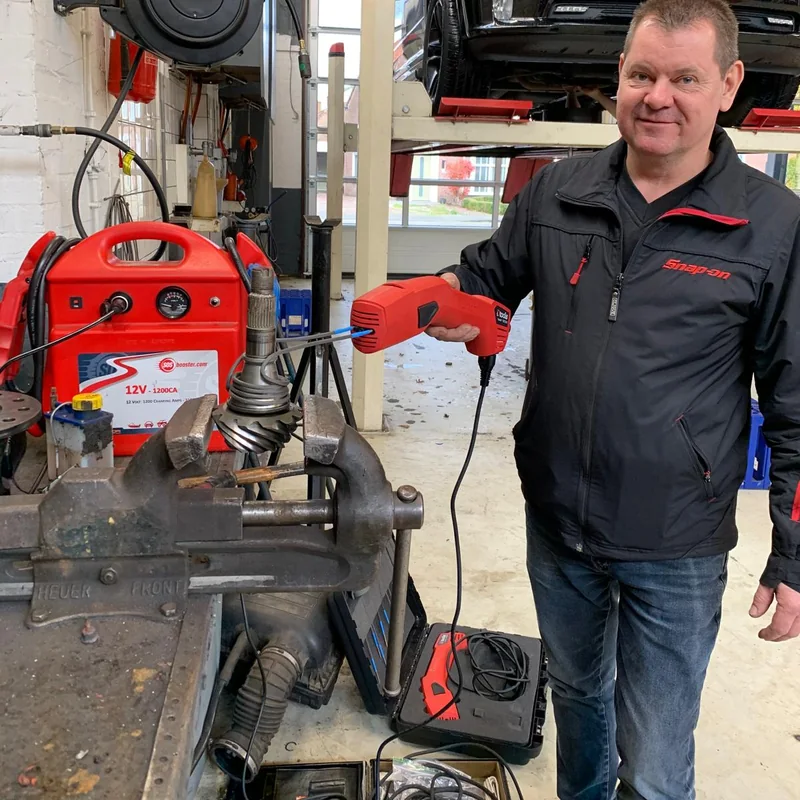
Made for bearing work
Exceptionally well suited to heating bearings, bushings and hubs
The iDuctor is built to heat bearings, bushings and hubs quickly and under control. Place the coil around the housing, the ring or the hub, press the trigger and within seconds the heat is exactly where it belongs — with no flame and without warming up the surrounding work.
The interchangeable coils reach installed parts you cannot remove, and with 1200 to 2300 watts you have the output for everything from a bushing in a control arm to a heavy bearing housing. That makes the iDuctor the tool you reach for every day: for disassembly, for fitting parts that go into place with heat, and anywhere a torch is not an option.
Choose the output that suits your parts
The greater the mass you have to heat, the more output you need. In bearing work, what counts most is the wall thickness of the housing and the space you have to place a coil around it.
| System | Best suited to | Output | Available kits |
|---|---|---|---|
| iDuctor W1200 | Bushings, smaller bearings and precise work in confined spaces | 1200 W | Basic and Professional |
| iDuctor W2000 120V | Heavier bearing work on a 120-volt supply | 2000 W | Basic and Professional |
| iDuctor W2300 Power+ | Heavy housings, large hubs and intensive use | 2300 W | Basic and Professional |
The iDuctor range
Compare the systems
Open a system to compare the Basic and Professional kits, prices, specifications and the matching coils.
Popular kits
Go straight to the right system
Three proven setups for day-to-day workshop work, heavier heating jobs and maximum output.
Professional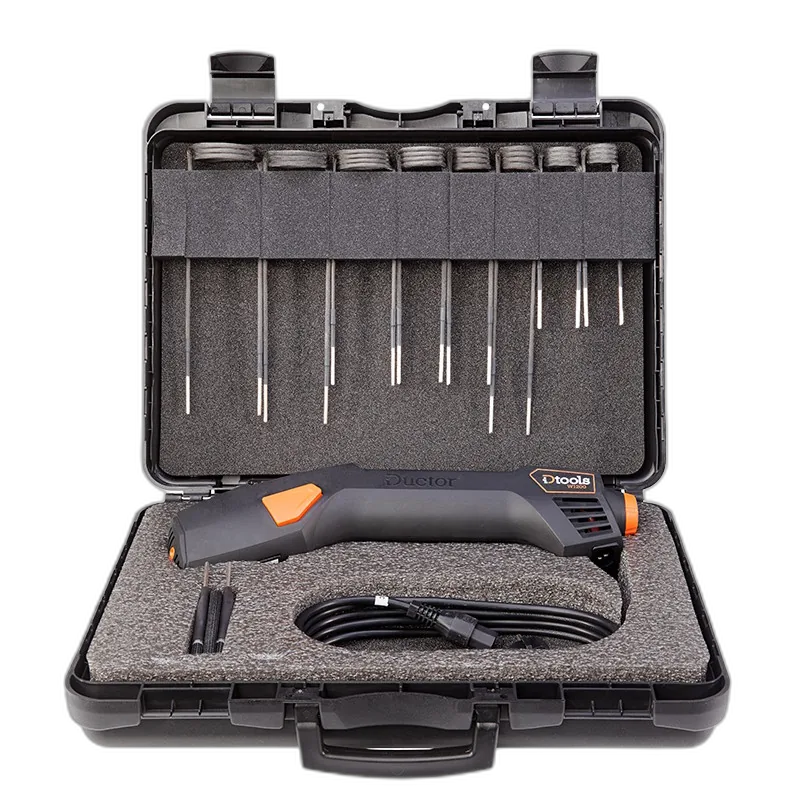 See kit
1200W system
iDuctor W1200
The iDuctor W1200 Basic Kit is a compact induction heating kit for safely loosening rusted ferrous parts without an open flame. It combines the 1200-watt iDuctor W1200 with the essential coils and accessories for precise day-to-day workshop work.
Advanced+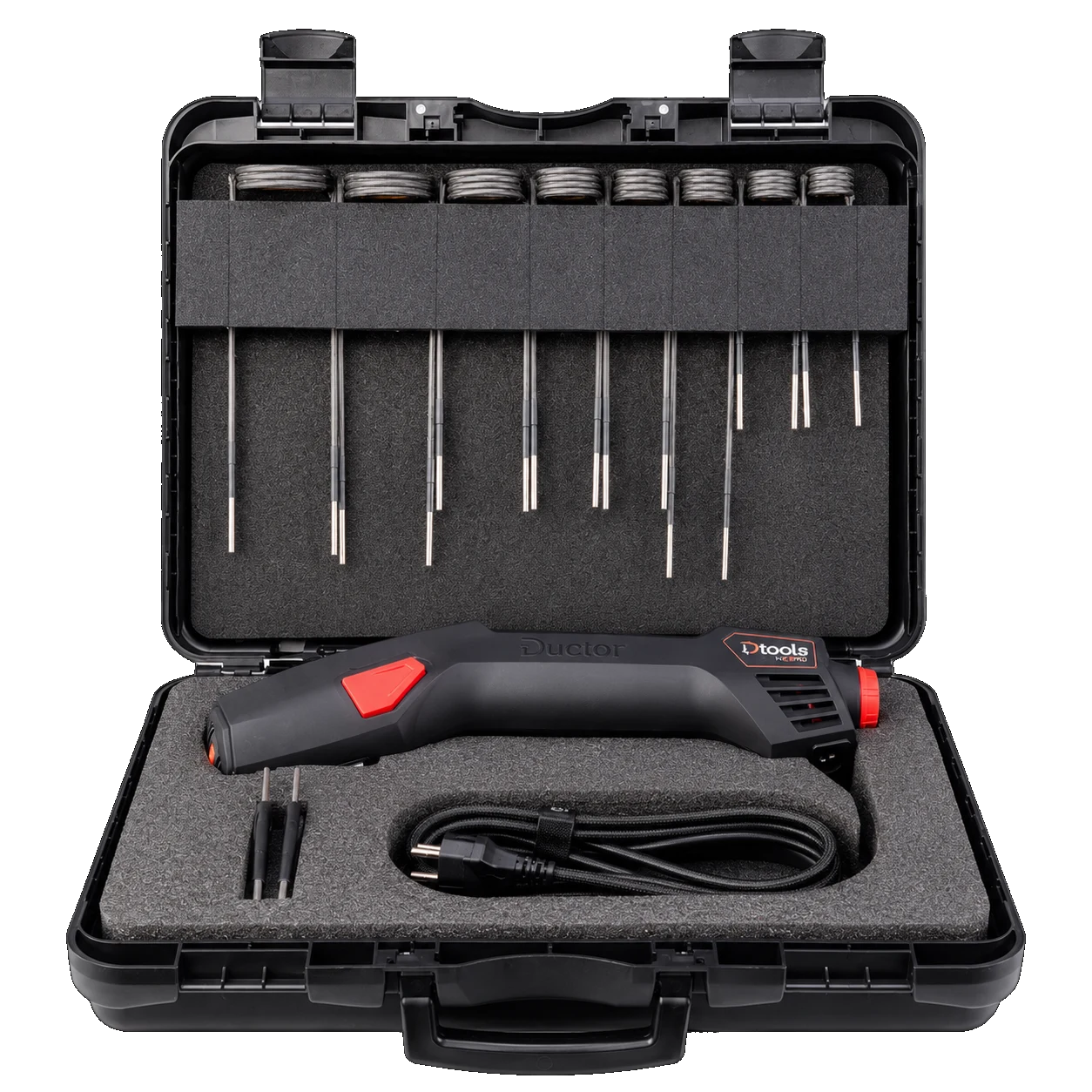 See kit
2000W system
iDuctor W2000 120V
The iDuctor W2000 Basic Kit 120V is a higher-output induction heating kit for heavier workshop jobs. This dedicated 120-volt version uses the W2000 platform to loosen rusted ferrous parts safely and precisely without an open flame.
Ultra Power++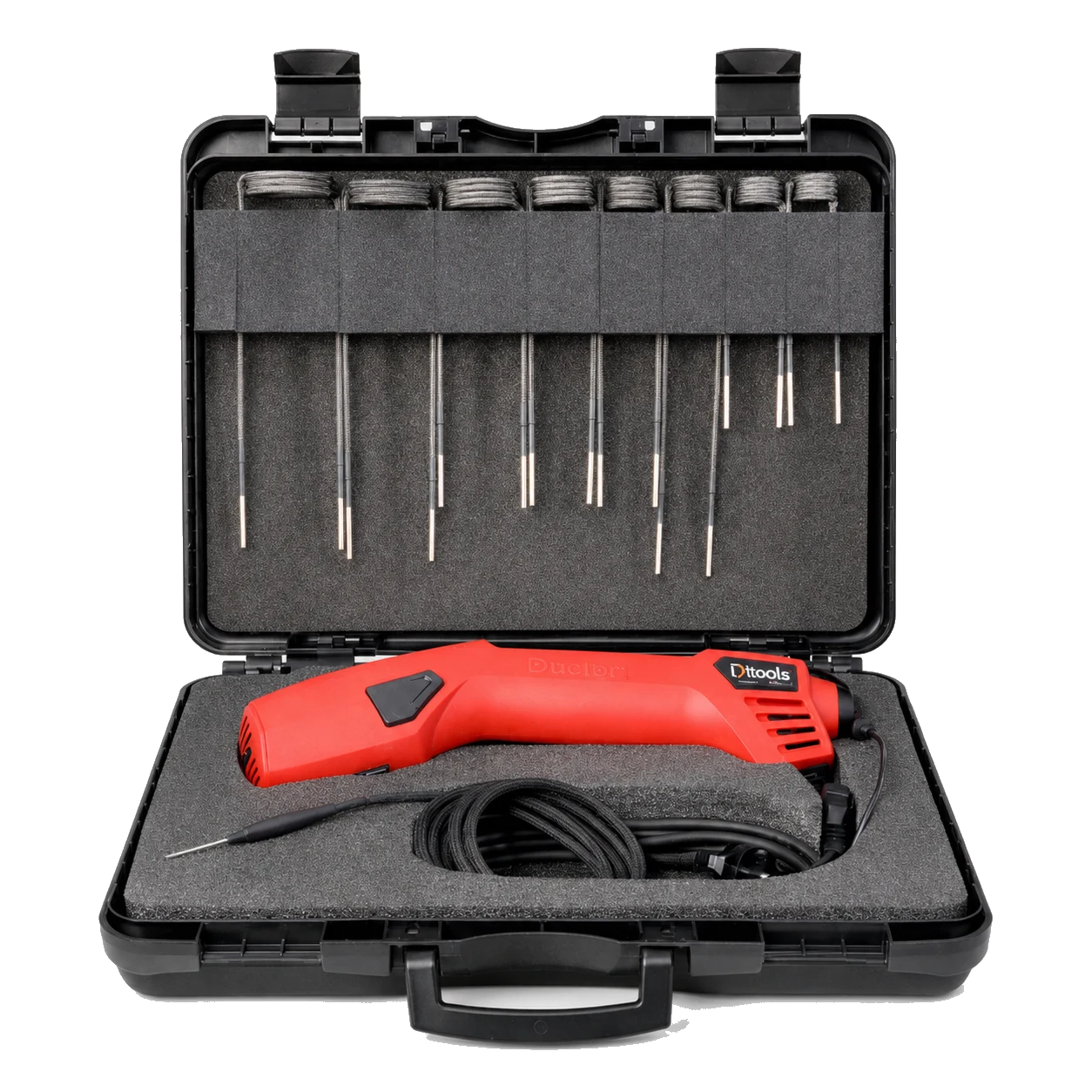 See kit
2300W Power+
iDuctor W2300 Power+ Kit
The iDuctor W2300 Power+ Kit is a high-output induction heating kit for heavier jobs. With 2300 watts of output, it safely loosens larger and heavier ferrous parts without an open flame and supports Flexcoils from 1100 mm up to 3500 mm.
About heating bearings with induction
How hot may a bearing get?
For standard bearings, around 120 °C is the limit; in practice you keep to 110 °C, which leaves dimensional stability and grease comfortably within spec. The iDuctor heats briefly and precisely, so that limit is easy to respect.
Does induction work on all bearings?
Induction works on ferromagnetic metals. Bearing rings are almost always steel, but an aluminium housing is not heated directly. In that case you heat the steel ring itself. The heat conducts into the aluminium housing, and because aluminium expands roughly twice as much per degree as steel, the fit still comes free.
Does a bearing need demagnetising after heating?
Not for disassembly: the bearing is replaced and residual magnetism plays no role. If you heat a bearing you intend to reuse, wipe the raceways clean and check them for metal particles before fitting.
Continue with the right guide
Not sure which system suits your bearing work?
Tell us which parts are involved, how heavy the housings are and how often you use the tool.