



An M12 nut is hot in a few seconds; a truck chassis bolt in well under a minute with the W2300 Power+. The torch needs minutes and heats the surroundings along the way.
Comparison
Induction heater vs gas torch
Both get a seized bolt hot. Only one does it in seconds, without a flame, without scorching everything around the part and without a gas bottle in the bay. Here is the comparison workshops make before they switch.
Two heat sources
The torch heats the area. Induction heats the part.
A gas torch burns a flame against the outside of the fastener and radiates heat over everything nearby: paint, rubber bushings, wiring, fuel lines, your own hands. Getting a bolt hot takes minutes, and half of that heat goes where you do not want it.
An induction heater generates the heat inside the steel itself. The coil sits around the bolt, the trigger goes down and the fastener glows within seconds while the aluminium housing next to it stays cold. Release the trigger and the heat stops. Same result, a fraction of the time, none of the collateral damage.
- No open flame at the point of work
- Heat only in the steel part inside the coil
- Hot in seconds, off the instant you release the trigger
- No gas bottles, no hot-work permit, no set-up time
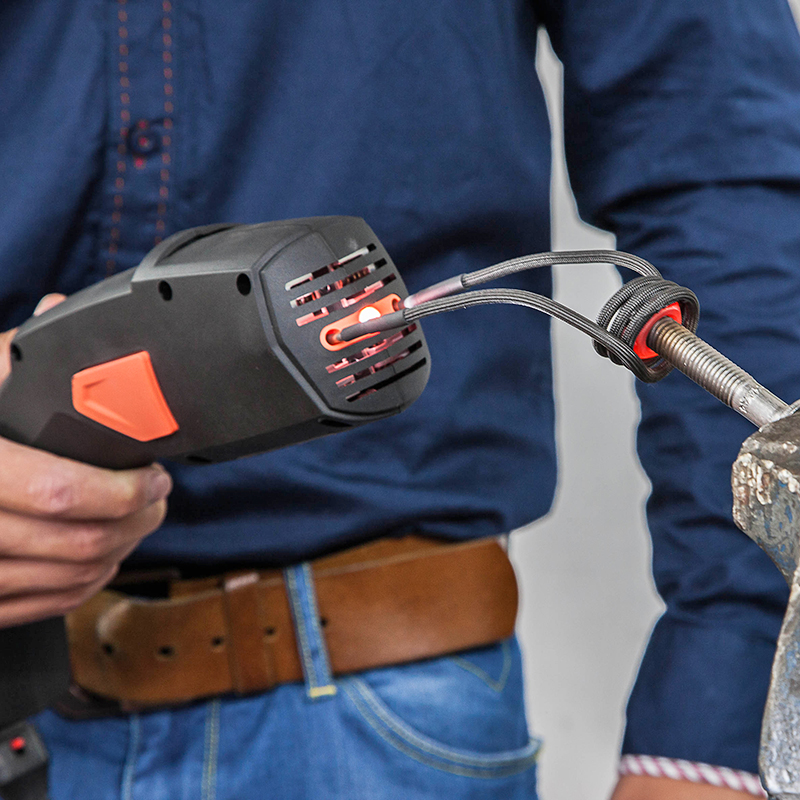
In the bay
What changes when the torch stays in the cupboard
Exhaust studs come off without cooking the lambda sensor wiring. Suspension bolts come out without setting the bushing on fire. Brake caliper bolts release without heat marks on the caliper. The job that used to mean heat shields, a fire blanket and someone standing by with an extinguisher becomes a two-minute task with one tool.
The bay stays cleaner, quieter and safer. No bottles to swap or store, no leaking regulators, no smell of burnt paint — and no explaining to a customer why the underbody coating is black around the repair.
Faster, safer and more precise — every day
No flame means no fire risk next to fuel tanks, brake lines and wiring looms, and no hot-work permit before you start. Only the steel inside the coil gets hot.
Heat the nut, not the stud. Heat the bearing housing, not the shaft. Induction lets you choose exactly which part expands — the torch cannot.
What a torch really costs
Every bottle, regulator and tip is a running cost. The iDuctor runs from the socket; the only consumables are coils, and those last for years.
One scorched wiring loom, one melted bushing or one snapped stud costs more than a day of billable hours. Induction removes those risks from the job.
Minutes per fastener add up to hours per week. Workshops that switch typically win back the price of an iDuctor within a few months of daily use.
See what it costs and what is in each kit: view the iDuctor systems.
Induction heater and gas torch compared
The same job, two very different ways of working.
| Criterion | Induction heater | Gas torch |
|---|---|---|
| Heat source | Generated inside the steel part | External open flame |
| Time to heat an M12 nut | A few seconds | One to several minutes |
| Heat-affected zone | Only the part inside the coil | Everything within reach of the flame and its radiation |
| Control | Instant electrical start and stop | Manual flame and gas adjustment |
| Fire risk | None — no flame | Present; hot-work permit, extinguisher, fire blanket |
| Consumables | None in daily use; coils last for years | Gas bottles, regulators, tips |
| Works on | Steel, cast iron, magnetic stainless | Any material — including the ones you did not want to heat |
The iDuctor range
Compare the three iDuctor systems
Open a system to compare the Basic and Professional kits, prices, specifications and compatible coils.
Popular kits
Go straight to the right system
Three proven setups for day-to-day workshop work, heavier heating jobs and maximum output.
Professional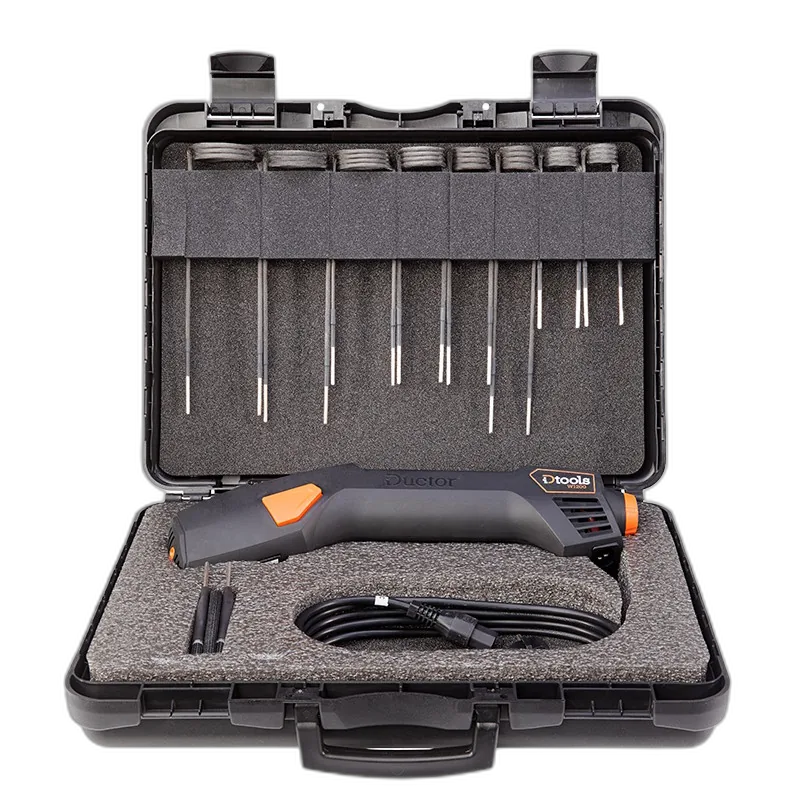 See kit
1200W system
iDuctor W1200
The iDuctor W1200 Basic Kit is a compact induction heating kit for safely loosening rusted ferrous parts without an open flame. It combines the 1200-watt iDuctor W1200 with the essential coils and accessories for precise day-to-day workshop work.
Advanced+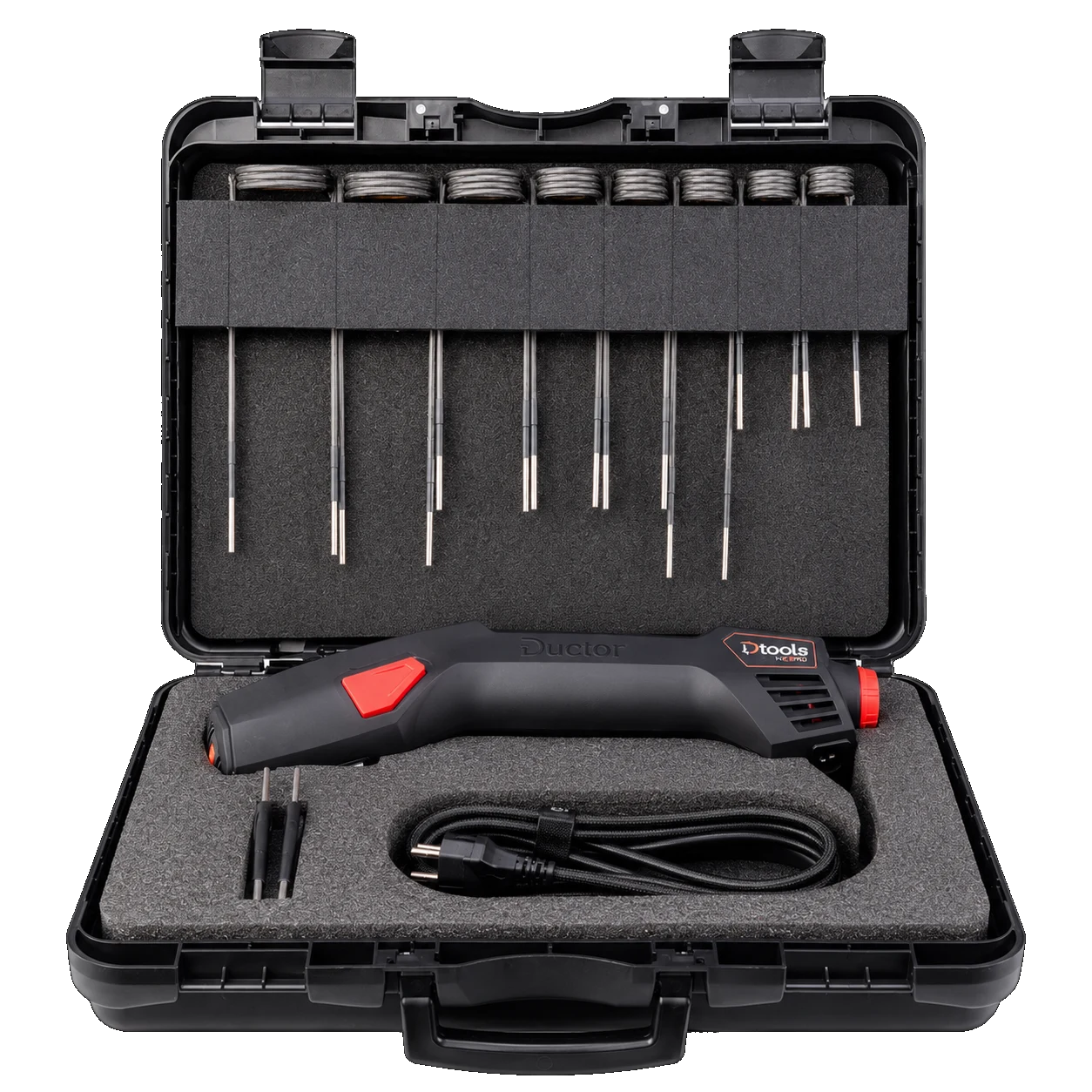 See kit
2000W system
iDuctor W2000 120V
The iDuctor W2000 Basic Kit 120V is a higher-output induction heating kit for heavier workshop jobs. This dedicated 120-volt version uses the W2000 platform to loosen rusted ferrous parts safely and precisely without an open flame.
Ultra Power++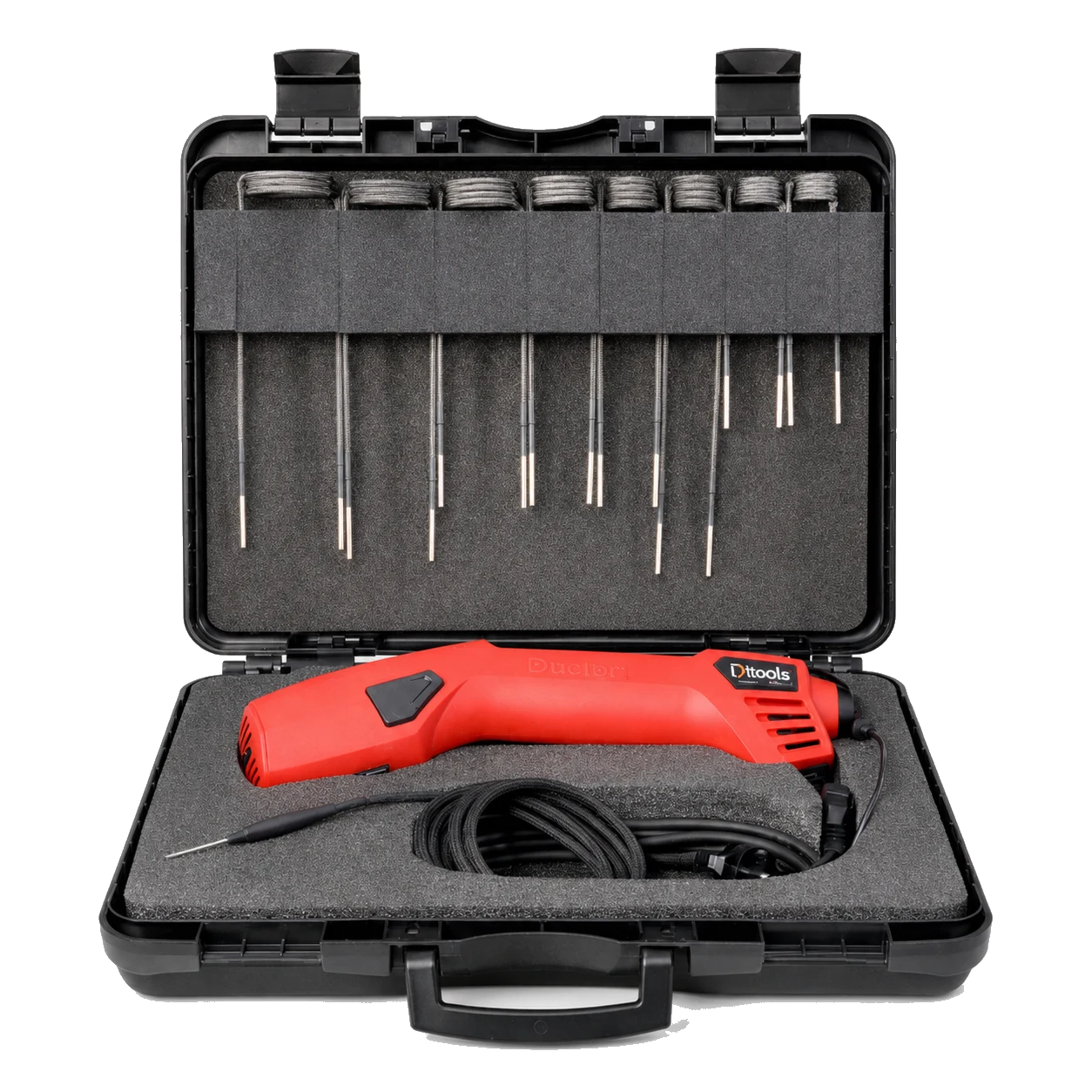 See kit
2300W Power+
iDuctor W2300 Power+ Kit
The iDuctor W2300 Power+ Kit is a high-output induction heating kit for heavier jobs. With 2300 watts of output, it safely loosens larger and heavier ferrous parts without an open flame and supports Flexcoils from 1100 mm up to 3500 mm.
About induction versus torch
Is an induction heater really faster than a torch?
On steel fasteners, yes — markedly. The heat is generated inside the part instead of being pushed in from the outside, so a nut that takes a torch minutes is glowing in seconds. The closer the coil fits, the faster it goes.
Is induction safer?
There is no flame, so there is no fire risk from the tool itself and nothing to ignite fuel, oil or rubber.
What about aluminium and non-ferrous parts?
Induction heats ferromagnetic metals: steel, cast iron, magnetic stainless — which is what fasteners, bearings and hubs are made of. That aluminium and copper do not heat is an advantage in practice: the housing stays cold while the steel bolt inside it heats.
Does an induction heater replace the torch completely?
For seized fasteners, bearings, bushings, hubs and thread-locked screws, yes — that is exactly what it is built for, and it does the job faster and cleaner. Most workshops that switch put the torch away for good.
Which iDuctor should I choose?
The W1200 for cars and vans and everyday fasteners, the W2000 120V for a 120-volt supply, the W2300 Power+ for trucks, machinery and all-day use. Our selector helps: Which iDuctor do I need?
Continue with the right guide
Ready to put the torch away?
Tell us what you heat and how often, and we will recommend the iDuctor and coils that replace your torch from day one.